


From registering an account and finding reliable suppliers to payment, inspection, and international shipping—whether you’re a cross-border e-commerce seller, brand owner, or a new buyer placing your first order on 1688, this guide will help you efficiently learn how to buy from 1688.
Let’s begin your 1688 journey.
What Is 1688?
1688 is Alibaba Group’s highest B2B e-commerce platform in China, serving primarily Chinese buyers with an immense variety of products at very low prices. Operative since 2010, the site aggregates millions of Chinese wholesalers, manufacturers, and trading companies to present a huge array of products from raw materials and industrial components to consumer electronics and customized items.
While most of the site’s business is done within the local market, numerous international buyers also buy products directly from Chinese manufacturers via 1688 and enjoy the site’s low price and direct seller contact.
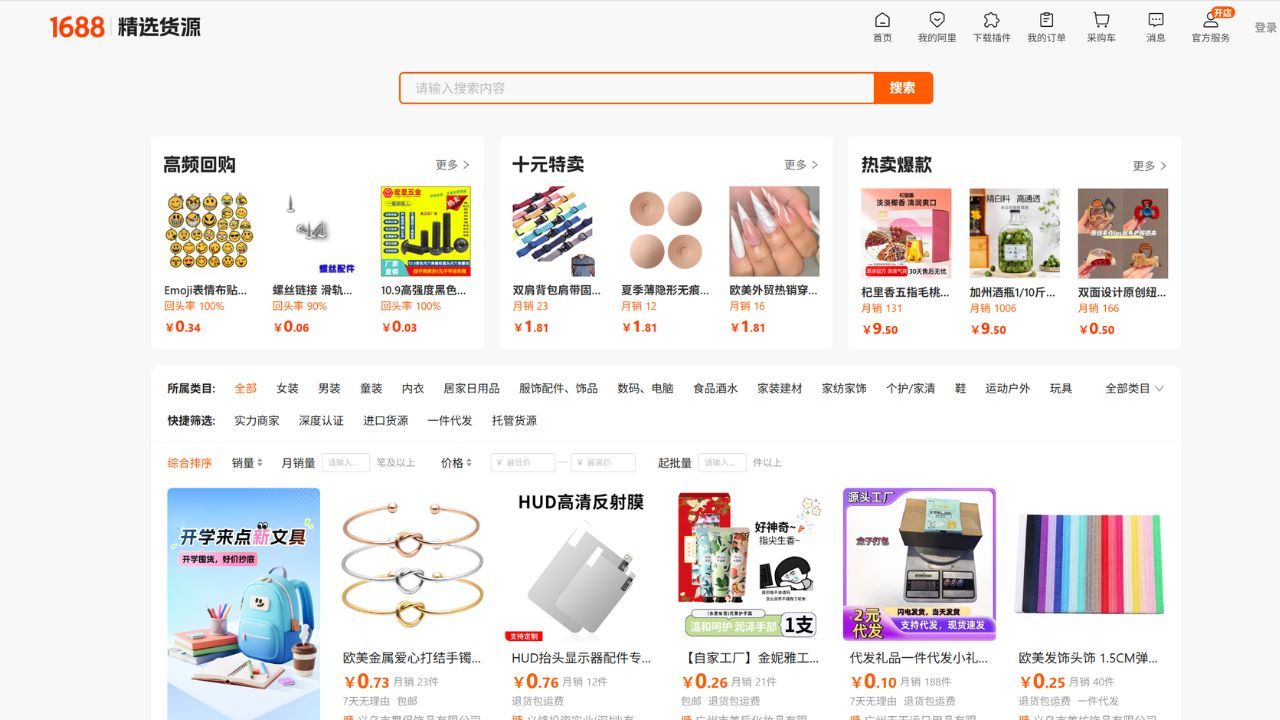
Why You Need to Buy from 1688?
Advantage
Huge Number of Suppliers
1688 connects tens of millions of manufacturers, wholesalers, and trading businesses across China, with full product resources covering almost all industries.
Competitive Prices
With the advantage of its home market, 1688 provides very competitive wholesale prices, enabling buyers to purchase goods at a reduced cost.
Flexible Minimum Order Quantities (MOQ)
Most 1688 suppliers accept small-batch orders, and some even support trial orders. Buyers can try before large-scale buying.
Direct Supplier Communication
1688 enabled direct communication between buyers and factories, lessening dependence on middlemen. This provides clear visibility into price, delivery time, and product specifications—keeping your costs low and profits high.
Product Customization Support
1688 offers OEM/ODM production, logo printing, and custom packaging support, giving buyers more product control, increased brand exposure, and increased market access.
Verifiable Supplier Credit Ratings
The platform’s credit system safeguards buyers’ interests. Sellers with a poor record or continuous complaints can be banned or closed down.
Quality Assurance & Export Compliance
The majority of 1688 suppliers are required to implement internal quality control systems and obtain required export licenses before shipping, to ensure products are of commercial and legal quality.
1688 is not just a platform for large wholesalers to source; it has room for all buyers. You’re either a small startup with limited capital, an e-commerce seller looking for drop-shipping services, a small manufacturer, or a big business with established credentials. 1688 has the best-fit suppliers for you.
Small Startups
For single vendors or low-capital startups, 1688 offers low MOQ and very competitive wholesale prices.
You may start with trial orders to quickly test the market potential of your product at minimal risk, ultimately creating a stable supply chain.
Dropshippers
Plumping for “dropshipping” (no stock maintained; products shipped directly out from the factories) is mostly supported by most 1688 suppliers.
Ideal for cross-border e-commerce marketplace vendors (e.g., Shopee, TikTok Shop, Shopify) to create speedy product releases, try out markets, and avoid inventory expenses and logistics headaches.
Small Manufacturers & SMEs
Various small-scale manufacturing units, repair shops, and assembly-based businesses source raw materials, components, and accessories on 1688.
The platform offers well-stocked supplier resources, consistent product specifications, and quick replenishment cycles—ideal for SME requirements of procurement.
For instance, electronics manufacturing factories purchase circuit components on 1688, and furniture manufacturers buy hardware fittings or interior accessories.
Established Companies
Ancillary or non-core products suppliers are also usually found by large companies on 1688.
Goods like packaging material, stationery, uniforms, and point-of-sale materials can be procured at lower costs.
Large companies typically use the services of professional freight forwarders or buying agents for payment, inspection, and international shipping to achieve compliance and effectiveness.
Summary
1688 caters to multiple buyer needs with its extensive supply chain network, open MOQ terms, and broad product spectrum.
No matter whether you’re a new startup or an established business, 1688 assists you in accessing stable Chinese manufacturing resources for effective, cost-efficient procurement objectives.
How to Buy from 1688: Step-by-Step
1688 is among the largest B2B wholesale websites in China.
As an e-commerce seller across borders, a small factory buyer, or a procurement manager at a large firm, knowing 1688 will allow you to communicate directly with Chinese suppliers and reduce procurement costs.
Below are the step-by-step details:
Registration and Login
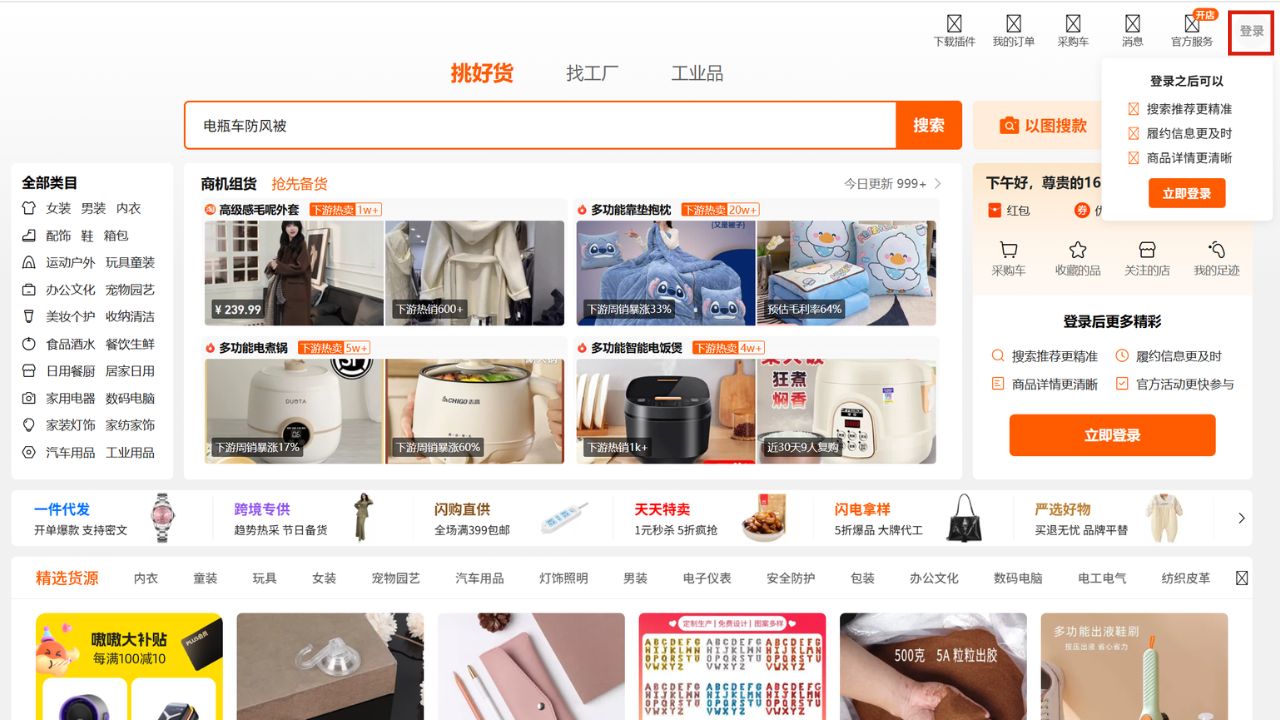
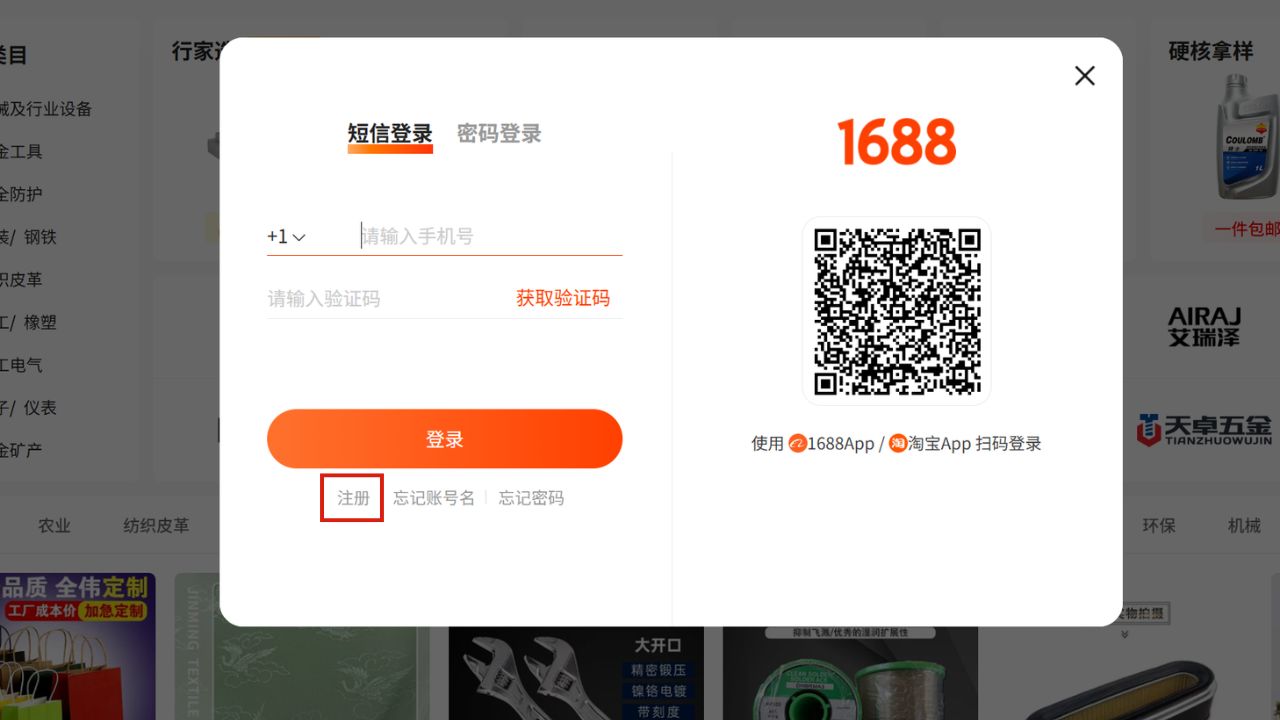
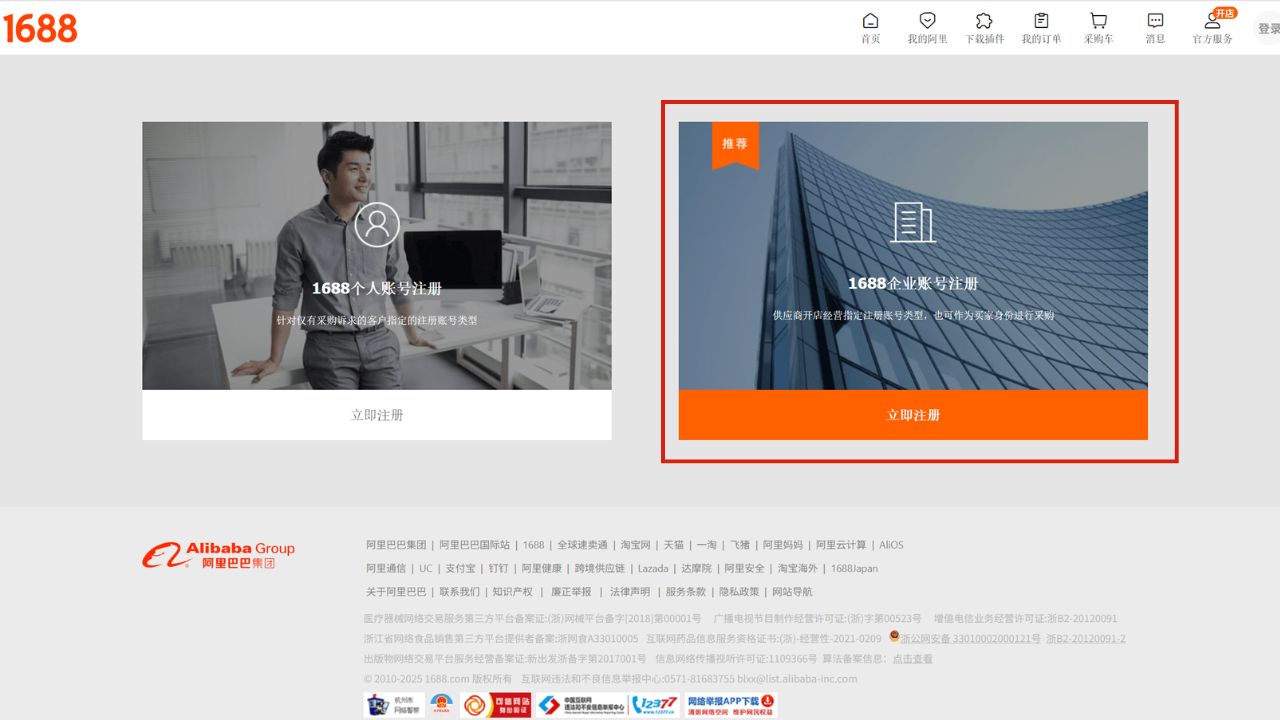
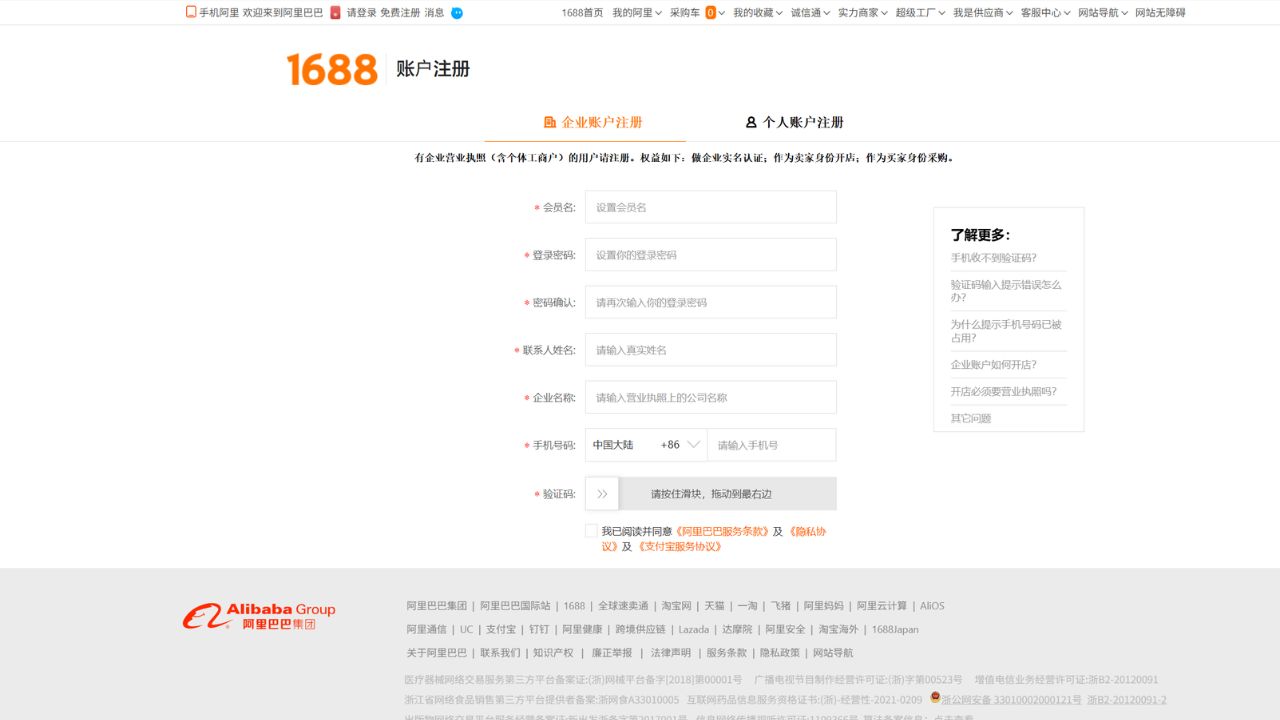
Two registration methods are available on 1688 at the moment. Choose the most appropriate one for you:
- Method 1: Register using a Chinese Mobile Number
If you or your employees/partners have a Chinese mobile number, you may register and verify your account directly on 1688.com.
- Method 2: Register via Freight Forwarder or Purchasing Agent
As foreign buyers mostly do not have a Chinese mobile number, it is possible to seek assistance from a freight forwarder or purchasing agent. Not only can they create your account, but they can also provide payment, warehousing, consolidated shipping, and overseas logistics.
- Note: Entering your company information and identity verification enhances seller trust and facilitates improved communication.
Product Searching and Tips
1688 has three methods of searching through 1688’s system for you to choose based on your requirements:
- Keyword Search: Simply enter keywords of the desired product into the search box. Click search, and 1688 will look up suitable products for you. Tip: Use Chinese keywords for a better result (translate your language into Chinese using Google Translate).
- Image Search: Take a screenshot or photograph of the desired product, upload the image, and 1688 will perform an intelligent search, displaying the most similar products. This is ideal for buyers unfamiliar with Chinese or unsure of specific product keywords.
- Category Filtering: After identifying potential products, refine your search by category, region, price, MOQ, shipping speed, and other criteria.
- Note: For greater convenience, we recommend selecting “Direct Factory” or “In-Stock & Fast Shipping” to help you find reliable factories or suppliers with in-stock items instantly, more efficiently, and accurately.
Screening Suppliers
Reliability of suppliers is most critical. Having a reliable supplier is half the success of a business. When screening suppliers on 1688, the following key points need to be noticed:
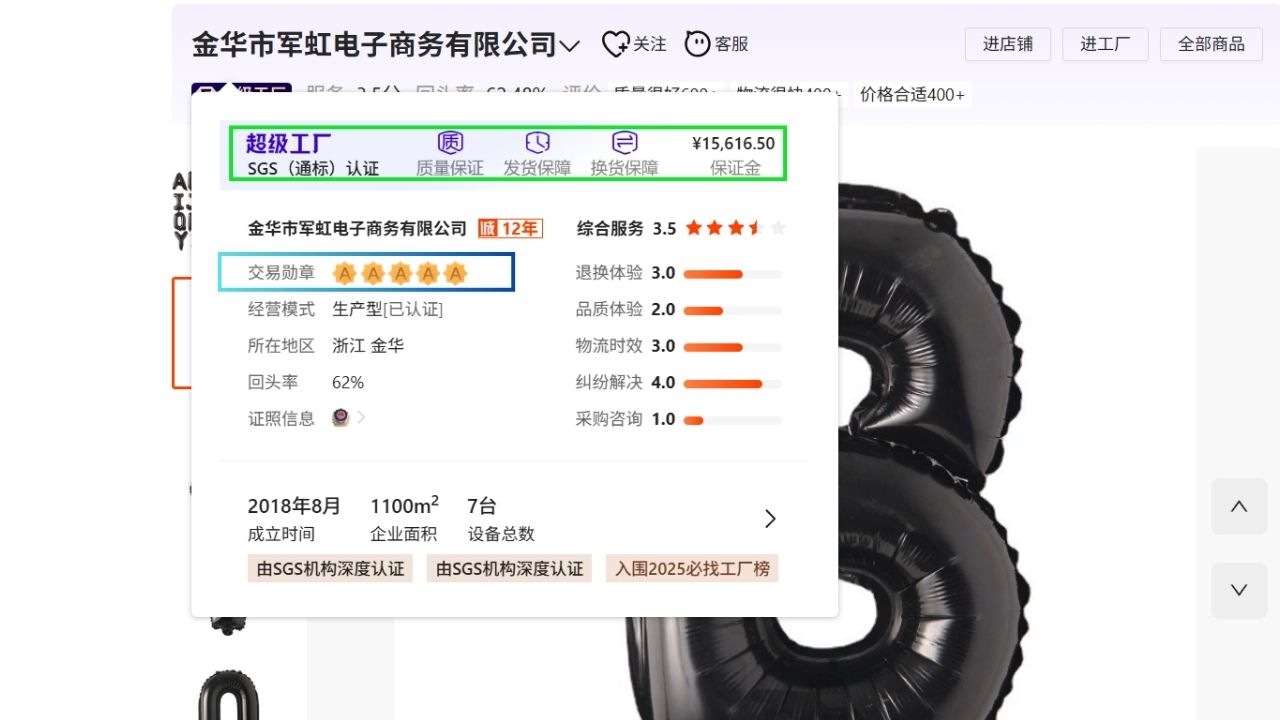
Store Credibility Badges
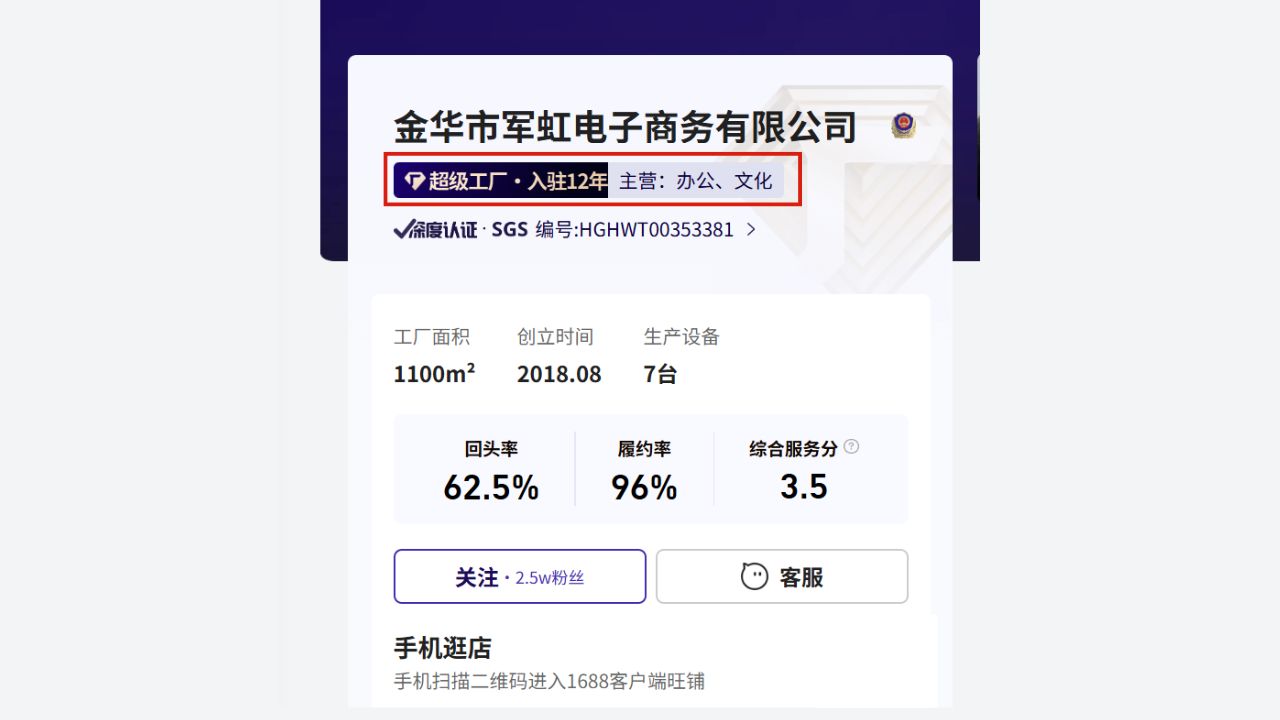
Integrity Pass: It is the most basic certification badge and also the fundamental requirement for products from a store being listed on 1688. Always choose stores with the “Integrity Pass” badge and check its activation time—longer times usually mean higher reliability.
Top-Tier Merchant: Typically marked with a “bull’s head” logo. This is a higher-level certification than Integrity Pass, indicating the store belongs to a factory or large-scale trading company, which is more trustworthy.
In-Depth Factory/Supplier Verification: If the website provides factory inspection reports, be sure to thoroughly read them. This will immediately provide insight into the supplier’s size and ability to manufacture.
Operational Metrics
Time in Business: On 1688, a longer operational history indicates greater store stability.
Transaction Medals: “1A” through “5A,” levels are for bigger transaction volume in the past 90 days.
Cumulative Transaction Count: For 1688 suppliers, a high transaction count is a positive indicator of high activity and strong customer recognition.
Repeat Purchase Rate: The indicator reflects customers’ loyalty with high percentages typically meaning consistent performance of both service and product.
Review System
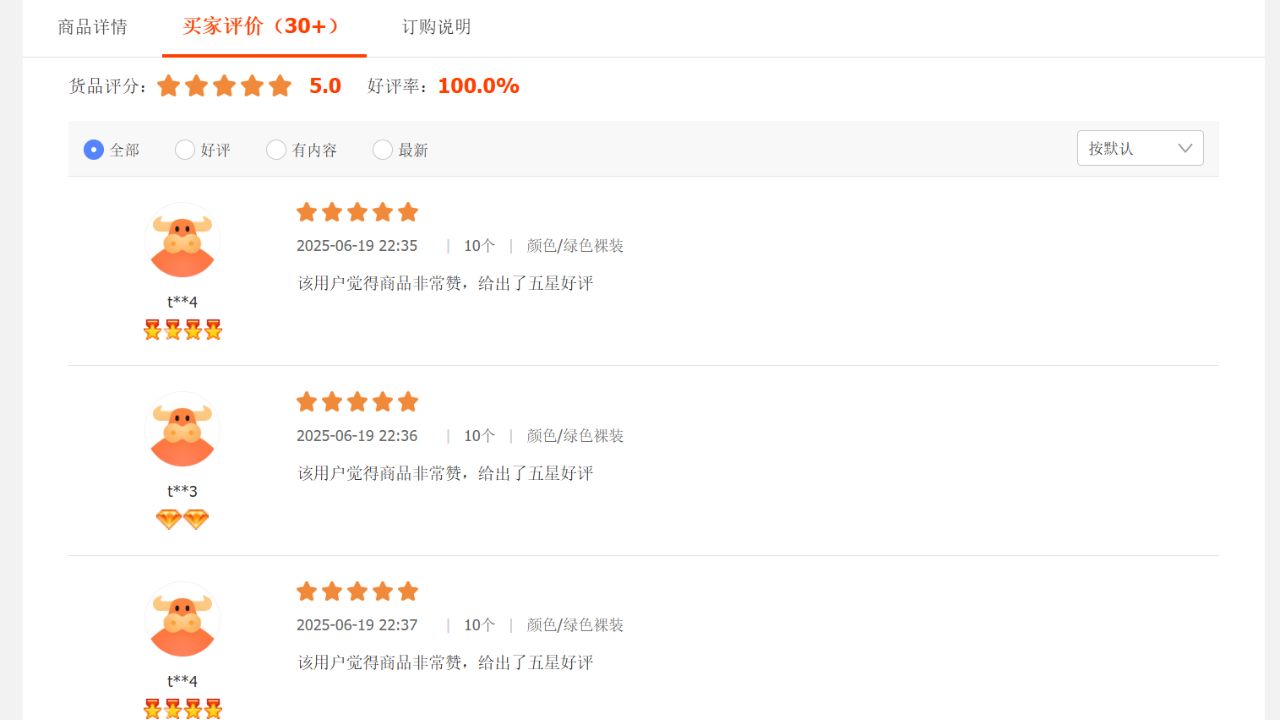
Read photo-based reviews and subsequent commentaries
These are a better reflection of product quality and service from the seller.
Read critical reviews
Watch sellers’ reactions and solutions to determine whether sellers can deliver after-sales service.
Note
Incentivate top suppliers with full credibility badges, high-volume transactions, and high repurchase rates.
Monitor vendors with bad reviews for fast and favorable resolution attempts.
Do not consider newly opened shops which are having bad reviews.
Inquiry Templates and Communication Methods
Good communication is one of the most important features of 1688 sourcing.
Accurate, competent questions help you receive accurate answers efficiently and help your suppliers to assess your requirements better.
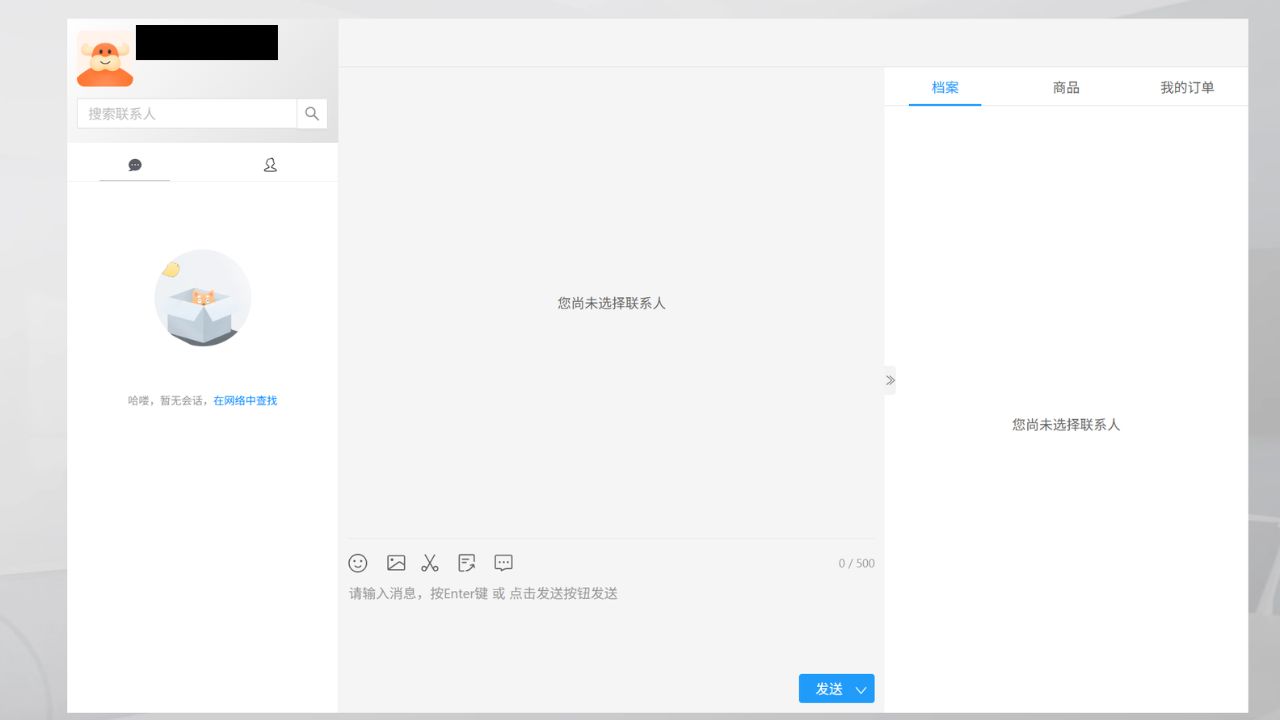
Communicating through “AliWangWang”:
AliWangWang is 1688’s official instant communication software. It is used as the main communication platform for 1688 sellers and buyers to perform tasks like requesting quotations, affirming specifications, negotiating transportation modes, transferring images and files, and saving transaction records. All communication records under AliWangWang are protected on the platform.
In case of future disputes, chat records are considered official proof.
Key Features of AliWangWang
Connected directly to store pages; pressing on “Contact Seller” opens up the chat window.
All chat history is preserved and secured on the platform as transaction proof.
Both mobile and desktop versions with message sync included.
lets you send images, videos, and files to facilitate product detail descriptions.
If buyers and sellers agree on terms (e.g., prices, delivery terms) on Aliwangwang, then Aliwangwang can facilitate the resolution of disputes on such records.
Chinese Question Template for Inquiry
Opening:
Hello, are you busy?
State Purpose:
Interested in this product [Paste product link or screenshot] and would like more information.
Key Questions:
What is the minimum order quantity (MOQ) for this product?
What is your current wholesale price? Do you give a discount on bulk quantities?
Do you dropship? What is your drop shipping margin?
Do you have stock of this product? If not, what is its lead time?
Could you send a sample first? How are sample charges and bulk pricing organized?
Conclusion:
Thank you. Please reply as quickly as possible.
Communication Key Point
Be Professional and Brief
Do not indulge in excessive small talk. Clearly state your requirements, quantities, and central problems so that others can easily understand your purchasing intention.
Clarify All Details
That is to say:
Product: Color, size, material, mode of packaging
Customization: Option to add logos, design variations, and packaging changes
Shipping: We can deliver to the forwarder’s warehouse, and the method of calculating freight
Retain chat records
Any price agreement, specification, as well as dates of delivery should be recorded on the chat history.
This effectively safeguards transaction security.
Sample Ordering and Confirmation
Before placing a formal order on 1688, it is essential to order samples first. This is a crucial step to ensure product quality and supplier reliability.
Sample Fees
Charging sample fees is a standard industry practice.
Most suppliers charge a sample fee based on product complexity (typically 1–3 times the unit price).
Refundable Sample Fees
If you proceed with a bulk order, some suppliers will refund the sample fee or credit it toward the total purchase amount. Remember to confirm this clause when placing your sample order.
Contractual Agreement
We recommend including “refundable sample fee” in the Proforma Invoice (PI) or chat records to prevent future disputes.
Sample Lead Time & Shipping
Typical sample lead times on 1688 are 3–7 days (standard products) or 10–15 days (custom products).
Domestic carriers like SF Express, YTO Express, STO Express, and Deppon are commonly used for sample shipping. For international samples, utilize DHL, FedEx, or freight forwarders.
Before placing an order, confirm whether the supplier can provide a tracking number and request photos or videos of the product packaging for verification. This ensures your samples arrive safely and securely.
Sample Evaluation
Key inspection points:
- Dimensions matching drawings/specifications
- Material, color, and surface finish meet standards
- Functionality/assembly working properly
- Packaging compliant with export requirements
Document Evaluation Findings:
- Photograph or videotape feedback for the supplier, clearly identifying issues.
- If modifications are required, request the supplier to reconfirm samples before placing a formal order.
Tips
For long-term collaborations or customized products, we recommend signing a Sample Approval Sheet.
All communications regarding sample confirmation, refunds, and shipping should be retained within Alibaba’s Aliwangwang platform for potential arbitration purposes.
MOQ, Price Negotiation, and Signing the PI/PO
After confirming the sample is satisfactory, you can proceed to the formal order placement stage. This phase is a crucial step in converting verbal agreements into official orders. During this stage, you should focus on three key elements: Minimum Order Quantity (MOQ), Price Negotiation, and Contract Documents (PI/PO).
MOQ (Minimum Order Quantity)
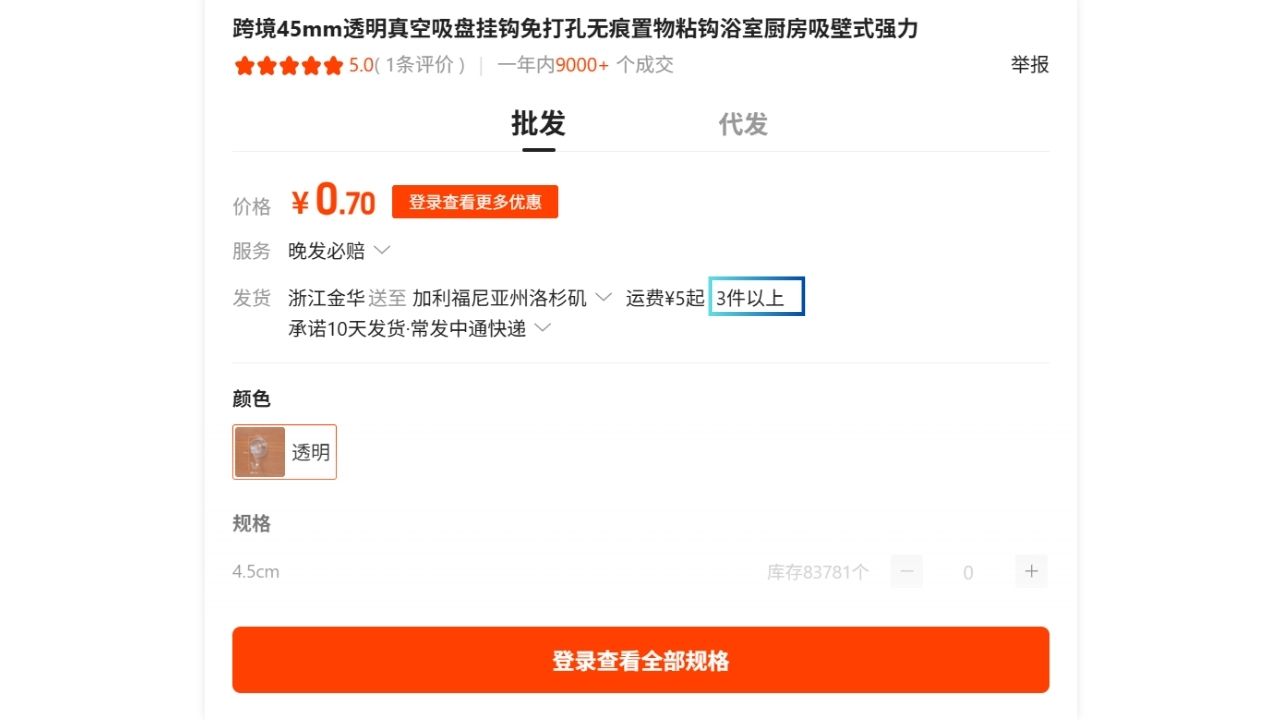
MOQ refers to the minimum purchase quantity required by the supplier. Note that MOQs vary across products and factories.
Standard MOQ:
Some products have higher initial orders (e.g., 500 or 1000 pieces), but negotiation is possible.
Methods to Lower MOQ:
- Position yourself as a long-term buyer with a genuine interest in establishing a lasting partnership with the supplier.
- Opt for in-stock items over custom products, which can effectively reduce lead times and help lower MOQ.
- Increase the unit price to accommodate smaller batches, but carefully calculate your costs and profit margins to avoid losses.
Tip:
Avoid blindly pursuing excessively low MOQs, as suppliers may compromise production standards or use substitute materials.
Price Negotiation Techniques
Prices on 1688 are mostly reference or range-based and often negotiable.
First, understand market rates: Compare quote ranges across multiple stores to establish your product’s price range.
Inquire About Discount Potential
“If I order ×× pieces, can you offer a lower price?”
“Does this include tax? Does it include shipping?”
Communicate with a Collaborative Mindset
Maintain a friendly tone with clear objectives, avoiding solely price pressure while neglecting quality.
Remember to Confirm
Whether the price includes packaging, logo printing, taxes, domestic shipping, etc. Clarifying these details prevents misunderstandings.
Signing PI / PO (Proforma Invoice and Purchase Order)
PI (Proforma Invoice) and PO (Purchase Order) are the most common transaction documents in international procurement.
- PI (Proforma Invoice): Issued by the seller, detailing products, quantities, unit prices, payment terms, delivery dates, shipping conditions, etc. It serves as the formal quotation document before payment.
- PO (Purchase Order): Issued by the buyer to confirm acceptance of the seller’s quotation.
Key Considerations:
- Verify details: Product name, model, specifications, quantity, unit price, total price, delivery time, payment terms.
- Ensure communication records match PI content.
- Require the supplier’s stamped confirmation.
- Recommend saving electronic copies and chat screenshots for future arbitration or after-sales support.
Common Pitfalls (Tips & Traps)
Excessively low price → May indicate compromised quality or fraudulent quotation.
Tax not specified → Risk of additional 13% VAT charges later.
Unconfirmed packaging/shipping methods → May incur additional costs later.
Requesting PI changes after payment → Exercise caution to avoid contractual risks.
Summary
Purchasing on 1688 isn’t just about price comparison—it’s about scrutinizing details. Clear MOQs, transparent quotations, and formal PIs/POs are essential for securing transactions and preventing misunderstandings.
Pricing & Landed Cost to buy on 1688
When sourcing on 1688, keep in mind that the unit price of goods is only part of your costs. What truly determines your profit is your final landed cost. Below is a table outlining other fees you may need to consider and pay:
| Cost Item | Calculation Method | Key Points & Notes |
| Product Purchase Price | ∑(Unit Price × Quantity) | Negotiated with the supplier. Note: distributor prices are usually calculated based on tiered discounts. |
| Domestic Shipping (to Warehouse) | Negotiated with the supplier | Few products on 1688 offer free shipping. You may be able to negotiate this waiver, especially for large or bulk purchases. |
| Packaging Fee | Derived from actual materials | May be borne by the supplier. The volume and weight of the package affect international shipping charges directly. |
| International Shipping / Freight | Dependent on Chargeable Weight (Higher of Actual vs. Volumetric Weight) | Volumetric Weight matters. For heavy but not voluminous items, the freight price could be 2–3 times higher than the cost by physical weight. |
| Customs Duty & VAT | Tax = Cross-border E-commerce Tax Rate × Dutiable Value | Dutiable Value is often the transaction value of an item, along with the shipping fee. Platforms like Alibaba.com may charge and remit VAT on shipments to the EU, UK, etc. |
| Customs Clearance Fee | Dependent on the carrier logistics | A processing fee for customs formalities, normally paid by your freight forwarder. Sharing the tax number of the platform might sometimes simplify this. |
| Domestic Delivery (Last Mile) | As specified by the logistics firm | The price for local delivery is calculated after the goods have arrived in the destination country. |
| Insurance | Insurance Premium = Insured Value × Premium Rate | e.g., Cargo Insurance that covers against loss or damage in transit. Platforms may also include Return Shipping Insurance. |
How to Ship Goods from 1688 to Your Home
Generally, foreign sellers have two shipping options: choosing direct international shipping to an overseas address or selecting a domestic forwarding agent.
Direct Shipping to an Overseas Address
This method involves buyers having goods shipped directly from China to their international address via suppliers or logistics companies provided on the 1688 platform.
Advantages:
- Convenient and Efficient: Eliminates intermediate steps by shipping goods directly from China to your country, saving time on forwarding.
- Time-saving: For buyers unfamiliar with forwarding processes, logistics services directly provided by suppliers offer the most straightforward approach.
- Enhanced security: Since logistics are arranged directly by suppliers, overall shipping risks are lower.
Disadvantages:
- Higher shipping costs: Direct international shipping fees are typically expensive, especially with international express services, which may cost more than using forwarders.
- Delivery times are unpredictable: International shipping timelines are influenced by multiple factors, particularly courier services, which can be disrupted by holidays, weather, and other variables, making delivery times unreliable.
- Limited logistics options: Your chosen supplier may partner with only a few international carriers, restricting your choices for shipping companies and methods.
Selecting a Domestic Forwarding Service
A domestic forwarding service refers to the process where you ship all purchased items to a forwarding warehouse within China, and the forwarding company handles the subsequent delivery of goods overseas.
Advantages:
- Cost-effective: Shipping costs through forwarders are typically lower than direct shipping, especially when utilizing sea freight or more economical air freight services. Forwarders often offer competitive pricing.
- More Logistics Options: Forwarders usually partner with multiple international carriers, allowing buyers to select shipping methods best suited to their needs (e.g., sea freight, air freight, or small parcel services).
- Consolidate Multiple Packages: If purchasing from multiple suppliers, forwarders typically offer package consolidation services. This combines several small packages into one larger shipment, reducing shipping costs.
Disadvantages:
- Complex process: Requires registering an account with the forwarding company, obtaining a Chinese warehouse address, and initiating forwarding once goods arrive at the warehouse. This process may be cumbersome for unfamiliar buyers.
- Longer transit times: Shipping via sea freight or economy air freight can take significantly longer. While cheaper, delivery may take several weeks.
- Higher risk: Involving multiple stages (supplier shipment, forwarder transit, international transport), resolving issues like lost or damaged packages can be relatively complicated.
Summarize
| Comparison Item | Direct Shipping to Foreign Address | Using a Domestic Freight Forwarder |
| Shipping Cost | Higher, especially with express services (DHL, FedEx, etc.) | In general, shorter, especially with sea shipment or economy air freight |
| Shipping Time | Fast, but it depends on the company and weather conditions | Slow, especially if following the economic shipping lanes |
| Ease of Process | Simple, just talk to the supplier directly | Requires more registration and processing, more steps taken |
| Logistics Options | Fewer, strongly dependent on logistics companies employed by the supplier | With greater choices, you can choose the best shipping option according to your needs |
| Safety | High, because the logistics company does direct shipping with fewer intermediary processes | Riskier, as there are more processes involved (shipping from the supplier, freight forwarder processing, foreign shipping, etc.) |
| Good for | Hurry-up shoppers or those wishing for a hassle-free process | Shoppers of big orders or cost shoppers who have plenty of time to waste |
Although 1688 is primarily designed for Chinese consumers, it also supports a variety of international payment methods to facilitate shopping by cross-border buyers. In this section, we describe common payment processes and respond to queries most frequently encountered by overseas consumers.
Payment Methods when buying products from 1688
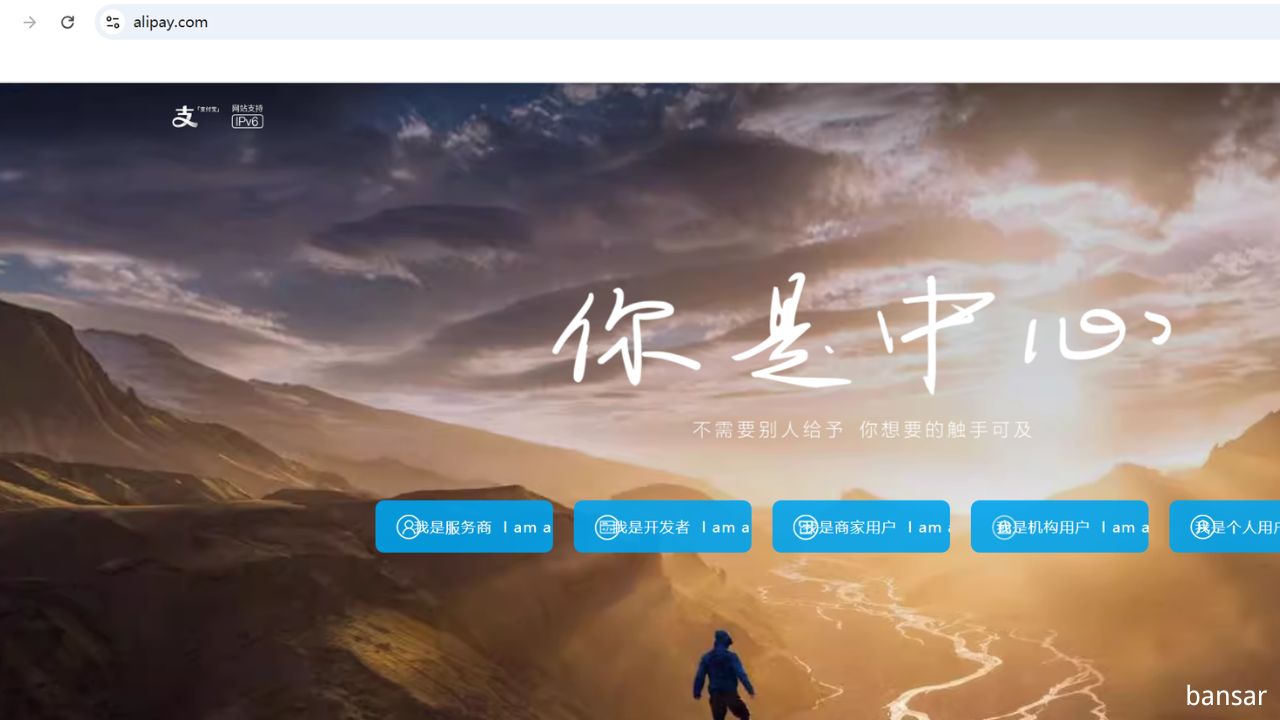
Alipay
Alipay is the most popular way of payment, supported by nearly all 1688 suppliers.
Advantages:
- Convenient and Rapid: Supports multiple payment forms, including bank cards, account balance, and credit cards.
- Security Guarantee: Alipay guarantees payment, allowing buyers to receive an acknowledgment in advance for payment before it is made to prevent disputes with goods.
How to Use:
- Without a Chinese Alipay account, signing up for an international Alipay account (with a connected credit card or foreign currency account) is necessary first.
- When you select Alipay during checkout on 1688, the site will take you directly to the Alipay payment page.
Bank Wire Transfer (T/T)
Bank wire transfer (T/T, Telegraphic Transfer) is a payment method typically used by buyers for large orders or long-term business relationships.
Benefits:
- Suitable for bulk transactions: Bank wire transfers are typically used for large orders.
- International transfers: Enables cross-border transactions, allowing buyers to pay directly from foreign bank accounts—convenient and secure.
How to Use:
- Seller’s Obligation: Sellers will provide Buyers with bank coordinates to get an International Wire Transfer.
- Buyer’s Responsibilities: Buyer has to pay the amount to the Seller’s bank account by international wire transfer through the Bank.
How to Control Your Goods Quality When Buying from 1688
Purchasing at 1688 will save you costs significantly, but foreign buyers have the biggest doubt regarding the quality control. Principally serving Chinese local customers, 1688 boasts an enormous number of suppliers with varying quality levels. Not utilizing quality control in the selection of products, the products that you purchase may have issues such as being different from samples, defective functions, or low-quality packaging.
Here are working methods to manage product quality properly for your 1688 procurement:
Sample Confirmation
Sample confirmation is an important process in controlling your product quality. It is unavoidable to order samples from the factory and visually check them meticulously prior to mass production. The process determines the quality standard for subsequent bulk orders.
When confirming a sample, pay particular attention to the following four points:
- BOM (Bill of Materials): Get suppliers to list the actual materials and components used in the product clearly, i.e., metal types, plastic grades, coating process, or electronic component brands.
- Dimensions and Tolerances: Inspect critical dimensions with measuring tools and get acceptable ranges of deviation. Minor errors can result in assembly failures or cosmetic defects.
- Functional Testing: Simulate real use conditions to ascertain product stability, e.g., power-on testing, seal integrity test, and wear trials.
- Packaging Inspection: Concurrently confirm that inner and outer packaging provide proper protection, are export shipping compliant, and comply with customs requirements such as branding.
Once the sample is confirmed, keep the photos, dimension data, and signed writings as a record. This will be a valuable reference point for follow-up shipments inspection.
Pre-Shipment Inspection
You must conduct a Pre-Shipment Inspection before the factory dispatches the goods. This step helps identify issues early, preventing losses from returns or claims.
Below is a practical pre-shipment inspection checklist for your reference:
- Verify quantity matches the order.
- Inspect appearance for visible defects such as scratches, color discrepancies, or printing errors.
- Conduct sample testing to confirm basic functionality.
- Measure critical product dimensions and compare against samples.
- Check packaging integrity and protective measures.
- Verify label accuracy (model, SKU, barcode, country of origin, etc.).
- Verify shipping dimensions and weight of outer carton.
- Verify accessories and instructions are present.
- Verify the traceability batch number or date of manufacture.
- Obtain detailed pictures and videos of goods for records.
- While the buyers themselves might not be on site, this checklist can be outsourced to factories, freight forwarders, or third-party inspection agencies to perform standard inspections.
Using Third-Party Inspection Agencies
If you’re a foreign buyer and unable to personally undertake factory inspections, look into getting the services of a third-party inspection agency.
Procedure:
- Select a compliant agency for collaboration.
- Provide clear guidelines: sample images, checklist of inspection, order details, etc.
- Schedule an appointment in advance, typically 2–3 days before shipment.
- Wait for the report: Receive a report with photos and findings within 24 hours of inspection.
- Arrange follow-up shipping after ascertaining compliance.
Some freight forwarders can also assist customers in arranging on-site photo and video inspection services so that buyers can view the condition of goods remotely prior to shipping to warehouses or consolidation centers. Your 1688 procurement process is made more convenient.
Selecting a Competent Freight Forwarder
Quality inspection is not confined to the factory floor. A competent freight forwarder can also be a good business ally in the quality inspection procedure.
A good freight forwarding team can assist you by:
- Checking packaging and outer carton marking at consolidation.
- Reporting immediately if damage or irregularities are discovered when loading the containers;
- Providing loading photos or videos to enable proper documentation of cargo condition.
By adopting a full “sample confirmation – pre-shipment inspection – loading verification” procedure, you can successfully reduce quality risks and avoid receiving non-conforming goods.
Summarize
The beauty of 1688 sourcing lies not so much in low-cost pricing but, more significantly, in harnessing controllable processes to ensure stable quality.
Either through initial sample testing, pre-shipment inspection, third-party inspection, or freight forwarder audit, precise management at every point ensures your interest protection and reputation to the fullest.
Working with a Chinese supply chain-aware freight forwarder provides you with more control and visibility, making 1688 sourcing cost-effective and risk-free purchasing.
1688 vs. Alibaba?
If you import from China, you’ve likely used both 1688.com and Alibaba.com. They’re sister websites belonging to the Alibaba Group but serve decidedly different customer bases. Understanding their differences will help you decide which is best for your business’s requirements — especially when using a freight forwarder or sourcing agent.
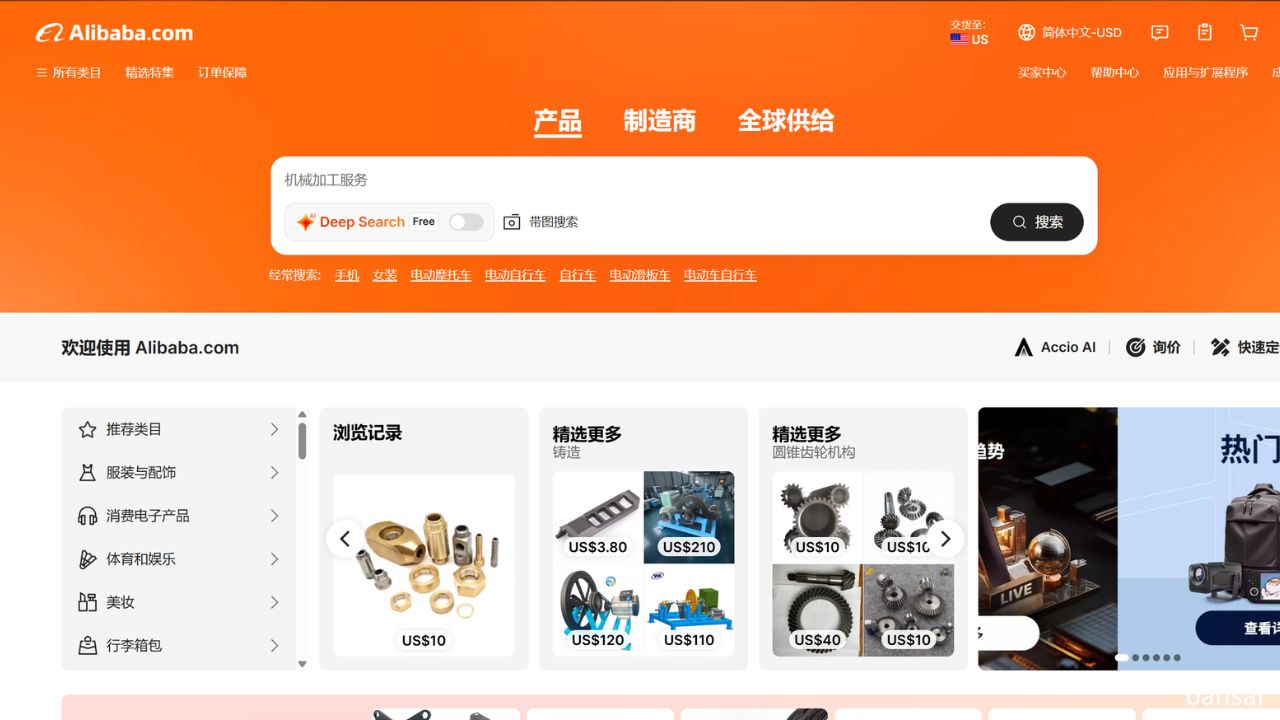
Market Positioning
1688 serves the domestic Chinese market, offering extremely competitive prices aimed mainly at local clients.
Alibaba, on the other hand, is a B2B international platform linking Chinese suppliers with foreign importers.
| Category | 1688.com | Alibaba.com |
| Target Users | Chinese local consumers, small workshops, and traders | Importers, wholesalers, and brand owners worldwide |
| Platform Language | Chinese language only | English (with multilingual translation) |
| Shipping Options | Domestic shipping only | International shipping through partners |
| Payment Methods | RMB-based payments (WeChat Pay, Alipay, local bank transfer) | International payments (PayPal, Visa, MasterCard, T/T, Western Union) |
| Pricing | Lower unit prices, little or no markup | Pricier due to the international cost of service |
| MOQ (Minimum Order Quantity) | Typically low | Generally higher, varying by supplier |
| Supplier Verification | Factory audits, trade assurance, ratings | Same system of verification, but clearer for foreign buyers |
| Private Label & OEM | Supported | Supported |
| Language Support | Chinese only | Multilingual (English, Spanish, Arabic, etc.) |
Pricing and MOQ
Its low price is one of the biggest attractions of 1688. Because it’s geared for local Chinese businesses, suppliers don’t add international fees or shipping. Most products can be purchased in small lots or even a single unit.
Conversely, Alibaba suppliers tend to have higher MOQs (Minimum Order Quantities), since they serve bulk buyers that import goods with the intention to sell them internationally.
Payment and Currency
Foreign buyers on 1688’s biggest challenge is payment and currency. 1688 only accepts RMB (CNY), where payment can be made by Alipay, WeChat Pay, or Chinese bank accounts.
But with companies like WorldFirst, international buyers can now open an account that directly connects them to 1688 sellers.
Alibaba, however, offers full international payment compatibility, such as PayPal, Visa, MasterCard, T/T, and even Western Union, to make payments more convenient and secure for international buyers.
Logistics and Shipping
1688 suppliers do not typically provide international shipping. That will necessitate an export packer or a sourcing agent to set up overseas shipping, customs clearance, and export packaging.
Alibaba suppliers do offer door-to-door or DDP (Delivered Duty Paid) shipping services via Alibaba logistics partners, perfect for those importers who prefer an all-in-one service.
Summary
1688 and Alibaba are both mighty purchasing tools — they simply serve different tiers of the supply chain.
1688 gives you factory prices, but local coordination and handling of logistics.
Alibaba gives global access but at a bit higher price and with more convenience.
Employ a professional freight forwarder. You can truly best of both worlds: low-cost sourcing from 1688, but professional export and shipping service as Alibaba buyers would have.
The Challenge And Solutions When Buying from 1688
To the majority of overseas buyers, 1688has unrivaled prices. But since it was originally designed for the Chinese domestic market, overseas purchasers are generally faced with a variety of real-world problems.
The following are the five most common problems — and real-world solutions — to allow you to buy safely and efficiently from 1688.
Language problem
Problem:
1688 is entirely Chinese, and most suppliers speak only Chinese. This can mystify foreign buyers when finding, comparing, and checking orders properly.
| Solution | Description |
| Utilize browser translation tools | Browsers like Chrome or Edge can instantly translate entire pages into English. |
| Prepare standard Chinese templates | Keep standard sentences handy, such as “Please quote me” or “Can I have a sample?” to facilitate communication. |
| Engage with a purchasing or freight forwarder agent | Local experts can handle communication, negotiation, and ordering with suppliers for you. |
Limited Payment Options
| Solution | Description |
| Use a third-party payment platform | Have a local sourcing agent or freight forwarder pay the supplier in RMB, while you pay in USD or other currencies. |
| Pass via a registered trade company | The majority of forwarders utilize trade company accounts to accept and remit payments in accordance with the law. |
| Use WorldFirst or similar cross-border solutions | Set up an RMB account for direct supply chain transactions via your 1688 profile. |
No International Shipping Options
| Solution | Description |
| Use a professional freight forwarder | Your forwarder can arrange door-to-door or port-to-port delivery, domestic pickup, consolidation, customs clearance, and foreign shipping. |
| Consolidate orders | Consolidate several 1688 orders into a single shipment to reduce overall freight expense. |
| Pre-arrange export documents | Ensure you are prepared with invoices, packing slips, and export declarations to avoid customs hold-up. |
Unstable Product Quality
| Solution | Key Actions |
| Request samples | Check dimensions, tolerances, function, and packaging before mass production. |
| Divide orders into batches | Start with a small batch to check quality, then increase quantities gradually. |
| Use third-party inspection services | Hire inspection teams or your freight forwarder to check the products before dispatch — including quantity, appearance, function, packaging, and weight. |
| Write out precise contract terms | Include rejection or return clauses in your purchase agreement to protect your rights. |
Communication and Execution Gaps
| Solution | Description |
| Draw up a short SOW (Scope of Work) | Confirm all specifications, packing details, delivery times, and responsibilities in writing before production starts. |
| Use standard Chinese templates | Keep communications short, concise, and preferably in Chinese — or have your forwarder handle direct communication. |
| Have a nominated person to contact | Guarantee communication consistency and avoid loss of information through multiple intermediaries. |
What to Take Note of Before You Order if You Purchase from 1668
Purchasing from 1688 means direct access to Chinese factories at competitive prices, but international buyers must thoroughly check some issues before ordering. Taking note of these saves you from smooth production, shipping, and customs clearing and minimizes disputes or unexpected costs.
Product Specifications and Quality Requirements
| Key Aspect | What to Confirm |
| Product Specifications | Dimensions, tolerances, weight, and functional requirements. Verify conformity to target market standards. |
| Materials | Verify the exact materials (metal grades, plastics, coatings) and confirm conformity to safety or regulatory standards. |
| Packaging | Verify inner and outer packaging, transit protection, and whether brand customization is needed. |
| Labeling and Marks | Add product labels, logos, serial numbers, and regulatory marks. |
| Inspection Standards | Define whether products should meet some tests or certifications (e.g., CE, RoHS) before shipping. |
| Customs Labels & Documentation | Check the labeling requirements of the destination country, e.g., barcodes, ingredients, or hazard warnings. |
Note: Keep all specifications in writing or in the purchase contract to avoid production or inspection discrepancies.
Invoice and Customs Documentation
There is documentation required for export or international shipment. Buyers must verify that the supplier can provide:
| Document | Purpose |
| Commercial Invoice | Used for customs clearance, listing description of product, price, and HS codes. |
| Packing List | Lists every item, quantity, and weight; it helps freight forwarders and customs to authenticate the shipment. |
| Other Certificates | Certificates of origin, test reports, or certificates of compliance, as required by the importing nation. |
Note: Verify customs code and estimate duties as soon as possible to prevent unexpected costs in the importation process.
Payment Terms and Order Conditions
Before ordering, verify finance and contract terms:
| Aspect | What to Check |
| Payment Terms | Percentage deposit, payment methods (Alipay, bank transfer, WorldFirst), and payment timeline for balance. |
| Delivery Schedule | Lead time for production, shipping dates, and accommodation for rush orders. |
| Compensation / Liability | Terms for policies in the event of defective goods, missing lots, or shipment damage; offer rejection, return, or replacement conditions. |
| After-Sales Policy | Warranties, technical support, or replacement process in the occurrence of an issue post-delivery. |
Note: Place all conditions in a written agreement to protect your interests.
HS Code and Estimated Duties
Why it’s relevant:
- HS codes set import duties and taxes in the importing nation.
- Pre-Confirmation helps buyers estimate total landed cost, including duty, tariff, and shipping fees.
Action Steps:
- Request the supplier to provide the correct HS code.
- Verify the code with your local customs authority.
- Sticking the HS code onto commercial invoices prevents delay or penalty.

FAQ
How Long Does Shipping Take to the US or Europe?
The transit time depends on the mode of transportation and the final destination:
| Shipping Mode | Approximate Transit Time | Description |
| Air Freight / Express (DHL, FedEx, UPS) | 5–10 days | Fast and suitable for small, high-value products. |
| Rail Freight (to Europe) | 20–30 days | Balanced option for medium-volume cargo. |
| Sea Freight | 30–45 days | Value for money for bulk; longer transit time. |
Most freight forwarders also have door-to-door (DDP) options wherein they arrange customs clearance and last-mile delivery, which makes the entire process easy.
Can I Pay in USD?
1688.com suppliers prefer payment solely in Chinese RMB (CNY) through payments such as Alipay, WeChat Pay, or local bank transfer.
But foreign customers do have the option to pay in USD using one of the following methods:
- By employing a freight forwarder or sourcing agent that offers RMB payment facilities.
- By employing a China-based trading company that can accept foreign exchange and remit to your supplier in RMB.
- With cross-border payment solutions like WorldFirst, you can open a CNY account and pay suppliers directly.
In short, you are able to pay in USD, but it typically requires an intermediary or a cross-border payment platform to complete the transaction seamlessly.
What is the Minimum Order Quantity (MOQ)?
The MOQ (Minimum Order Quantity) of 1688 tends to be significantly lower than Alibaba since the platform is used mainly to serve China’s internal market.
Most of the 1688 suppliers will accept small test orders, as small as 1–10 pieces. However, some factories still have regular production MOQs that vary according to material, color, or whether customization is required.
If you’re purchasing through a freight forwarder or purchasing agent, they can typically negotiate for you to get smaller MOQs or consolidate multiple small orders together into one shipment, and thus reduce your total cost of logistics.
Conclusion
If you are preparing to bulk purchase from 1688 but are also searching for a reliable third-party freight forwarding service, Bansar will now be your best partner.

