


At the core of every successful online shopping experience is not shipping, warehousing, or even the Internet, but an order picking strategy. In this article, we will guide you through providing useful information about this process that can help eliminate the dilemmas in your supply chain.
What is Order Picking?
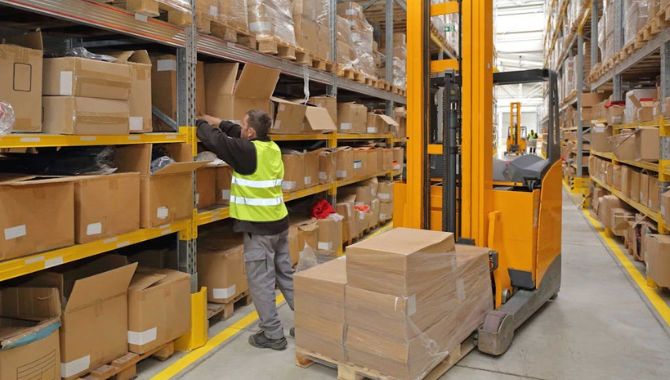
Order picking is simply when you choose the right order to deliver to your right customer where the goods are placed. The order picking process is done through the arrangement and organization of the warehouse in a reasonable way. Items in the warehouse are located and classified to be easy to find and retrieve.
It is included in the whole procedure: Receive order -> Locate goods -> Pick goods -> Check goods against orders -> Pack goods -> Update information
To better visualize this job, you can put yourself in a similar situation:
Suppose you are shopping at a supermarket. At this time, you are also an order picking staff – you have a list of items to pick but they are in different locations. So you need to go around to be able to pick up enough desired items. This is also the task of an “order picker” in the warehouse.
The Advantages That Order Picking Can Bring to Your Business

Order picking is a labor-intensive and time-consuming activity. If you can establish a strategy that is appropriate for your warehouse, it will bring the following benefits:
- Reduce travel
The travel time of workers to collect items is one of the biggest wastes affecting warehouse productivity. Therefore, to minimize travel, businesses should organize warehouse strategies and carefully plan picking routes.
- Reduce errors
In the order picking process, common errors include selecting the wrong item, ignoring defective items, ordering the wrong quantity, etc. When these defective items are released from the warehouse, they are likely to be returned when sent to customers, thereby negatively affecting the brand as well as the customer experience.
While human error is inevitable, businesses can improve accuracy by using technology such as barcode scanners and the solutions that technology provides. When errors occur in the picking process, keep records and analyze them to find the root of the problem, thereby thoroughly solving and minimizing unnecessary errors.
- Increase safety
Ensuring safety when picking in the warehouse is the key to preventing injuries on the job. Your business needs to prioritize occupational health and safety standards.
When the production process takes place, repetitive movements can cause obvious and common injuries, but this problem can be prevented. In addition to ensuring items are easily accessible and at the right height, you can use forklifts and trolleys to support them.
- Maximize Space
When items are difficult to locate and not arranged in fixed locations, workers will need more time to pick them up. Insufficient aisle width is also a problem for forklifts and other handling equipment.
Applying good order picking will help you arrange goods carefully and scientifically, thereby maximizing space and improving the picking process. When all inventory is stored properly you will minimize waste in the production process.
Forms of Order Picking
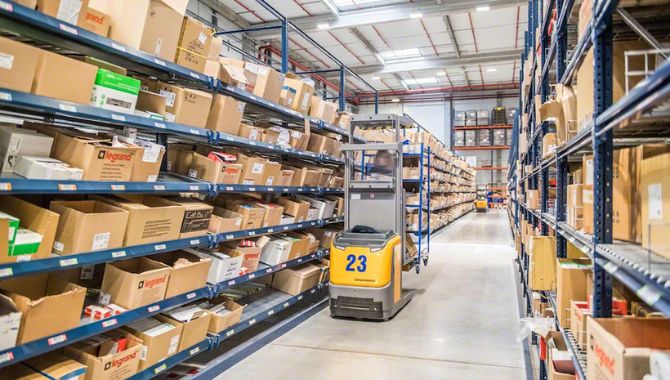
There are several ways to place items into different tools that you need to know including:
- Pick-to-carton
The picker will pick items of similar size and weight and put them into the same suitable carton. You should note that if the items are not the same shape, this form cannot be applied.
- Pick-to-tote
Instead of putting them into cardboard boxes or large boxes, you will place different items into plastic boxes and have them checked and packed by the staff. This packing can take longer because you need to make sure that the necessary items are in the box.
- Pick-to-cart
You can place different items into separate boxes on a cart and move them to the packing area. This form is suitable for picking many different items at the same time. However, there needs to be a wide enough path so that the carts do not collide with each other.
- Pick-to-picker
This method allows items to be brought to a fixed pick-up point. However, this method is only applicable to modern warehouses with advanced equipment such as robots to move goods automatically, employees only have the task of picking up the goods and starting the packing process.
Common Picking Methods
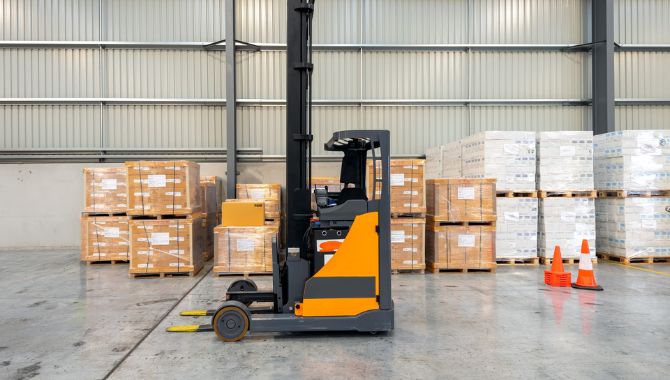
Here are some of the most common picking methods you may see:
- Piece order picking
This is a common picking method used in retail operations, especially when customers request specific or different products. This activity has no specific schedule and can be done at any time of the day
You will be able to do it quickly when requested and it has a simple process. However, because there is no specific schedule and plan, the time to search and pick up goods will be longer and require more human resources
- Single order picking
Workers pick orders one at a time along the path until the entire order is completed.
Businesses can also easily instruct employees on the work. This method is suitable for new retailers or businesses that are not yet large enough to reap the benefits of more complex picking methods.
Although simple, this method is not really effective and takes a lot of time to move. Because the entire journey of the employee in the warehouse is completed in only 1 order, it cannot be applied in large enterprises with a high number of orders
- Batch order picking
The characteristic of this method is that the orders will be divided into small groups. Each employee will be assigned a task to a group and pick up the goods for that batch at a certain time.
When using this method, you can significantly save time traveling between spaces because the picker only needs to go to the shelf locations containing the goods once
The disadvantage of this method is that if your warehouse is too large, it can cause overload because the goods are divided into too many different groups.
- Cluster order picking
This picking method is often applied to enterprises that supply many orders at the same time. The picker will take turns picking up the requested product codes and putting them into separate storage areas. Each container corresponds to a list of orders.
Choosing this method helps you optimize the sorting process because it has been done by the picker. Moreover, it also eliminates repetitive movements, saving a lot of time and effort.
However, this method requires you to invest in management technology when scheduling and clustering scientifically and effectively.
- Wave order picking
This method is a combination of piece picking and zone picking. Orders will be scheduled to be picked up at the same time, creating a complete and performed in batches throughout the day
Because you can select many goods and arrange all activities, the process will be faster
On the other hand, a large amount of goods are picked at the same time, so the requirement for a storage solution will increase and may cost more.
- Zone order picking
This is the method where you will divide the goods into separate areas. Employees will be assigned to separate work areas and will be responsible for picking up goods in that area
You will save a significant amount of time moving between storage areas and goods will also be clearly and specifically managed, convenient for preparing orders with many discrete materials
This method is not suitable for factories with few goods, it can waste time when employees wait to receive goods from other areas.
Choosing the most suitable method for your warehouse is one of the most important steps to optimize the entire supply chain bansarchina.com provides solutions to your difficult problems with the order picking process. Contact us as soon as possible to help you operate your process well.
The Technologies And Equipment Support Order Picking
- Pick-to-light
This is a technology that helps manage and process orders through the use of indicator lights.
With this system, warehouse staff only need to move to the locations where the lights are on and take the quantity of goods displayed on the lights. This helps optimize the picking process, save time searching for goods in the warehouse, and facilitate employees to perform operations quickly, easily, and effectively.
Using this technology will save you time compared to the traditional way of picking, which requires consulting a list and taking time and effort to pick each item individually.
In addition, it also helps increase efficiency because the picking system is directly connected to the shelves, allowing for quick collection and real-time updating of information. The picking process is faster and more accurate.
- Voice picking.
This is a system where the picker will be instructed about the order to be picked through a reminder from a device worn on the ear. This technology helps avoid wasting time because the demand is met quickly and promptly.
- Mobile Pick Scanner
When using this device, you need to create a difference in the barcode that is pasted on each product. This technology allows to detection and correction of errors in the list of items that the picker needs to choose, helping to reduce the rate of selecting the wrong goods.
- Robots
Robots help perform picking tasks automatically and quickly through programmed instructions to reduce labor costs. Robots that help pick items come in many forms, including autonomous guided vehicles (AGVs, AMRs), unmanned aerial vehicles (Drones), and automated storage and retrieval systems (AS/RS).
Consider Factors for Effective Order Picking Strategy

Despite the importance of order picking, most manufacturing businesses today still do not fully understand the criteria. To develop an effective Order Picking strategy, you need to pay attention to the following factors:
- Order Picking Method
This factor directly affects the picking process of a business. For example, some methods require workers to move to item locations in the warehouse, while other modern methods use automation and robots to bring items to the picker.
- Order Picking Technique and Route
For example, single picking, batch picking, or wave picking. There is no best strategy for all businesses, so you need to choose the appropriate picking techniques for your needs.
- Technology
Nowadays, technology is increasingly applied in order picking, such as voice picking, radio frequency (RF), barcode scanners, light picking, and robotic and automation solutions, etc. These advanced technologies can help businesses shorten the production process and minimize human errors.
However, an optimal and effective picking process does not stop at the issues mentioned above but also involves many other important factors such as monitoring – warehouse space design, inventory management, optimizing operations with QR codes, packaging processes, etc.
Therefore, what manufacturing businesses need to start doing right from the beginning is to build a comprehensive warehouse management system to provide the most comprehensive view of the entire warehouse management process.
With an effective order picking process, businesses can improve performance, minimize errors, and optimize warehouse management processes. This means providing quality service and increasing customer satisfaction.
The Emerging Trends in Order Picking

One of the prominent trends is the deeper integration with artificial intelligence (AI) to create smarter systems that can learn by themselves and automate complex processes. AI will help you analyze and make decisions from IoT data effectively.
In addition, integrating Machine Learning into IoT devices will improve the ability to predict and analyze data, helping you forecast market trends, detect errors in production processes, and optimize supply chains. These machine learning models also help enhance the ability to personalize services and products.
Conclusion
To wrap it up, order picking has proven to be extremely important in a business’s supply chain. Choosing a reasonable process will bring countless benefits to you. Through this article, we hope to provide you with useful knowledge about order picking.
FAQs:
Can automation completely replace human involvement in picking?
Automation cannot completely replace humans in the process of picking goods because, during operation, automatic devices can malfunction, causing downtime and requiring repair and maintenance.
Many people think that when more and more robots or artificial intelligence are used, they will replace human labor. However, the reality shows that robots can only replace humans in repetitive tasks, while for jobs that require skills, only humans can do the best. Therefore, a well-trained workforce is needed to make the most of the automation field.
What are common mistakes when picking goods and how to avoid them?
Common mistakes are due to the unscientific arrangement of goods, which will take a lot of time to search, so you need to pay attention when loading and unloading goods on shelves in the warehouse and classify them by product. You can arrange each product on a separate shelf or shelf to make it easier to find and check.
What are the costs associated with improving the picking process?
The types of costs you need to pay will be related to the scale of your business operations, labor costs, and investment in modern technologies and machinery for the purpose of process optimization.

