


In the pharmaceutical industry, product storage requires precision and compliance with strict safety and preservation regulations. Therefore, having a standard pharmaceutical warehouse is essential for your business. Stay with us to learn some aspects of pharmaceutical warehousing service offers before your freight forwarder delivers your goods
What is a Pharmaceutical Warehousing?

Pharmaceutical warehouses are specialized warehouses that your business uses to store pharmaceutical products, ingredients, and medicines that meet the standards issued by the Ministry of Health. After production, most products must go through exchange and circulation to the consumer sector, which means they must go through the stage of storing goods in pharmaceutical warehouses.
Challenges Your Business Can Face in Pharmaceutical Warehouse Management

Some of the common challenges your business may face in pharmaceutical inventory management include:
- Increasing demand requires increased warehouse capacity
The increasing demand for fulfilling orders has made it difficult for manufacturing management in general and warehouse management in particular, especially in the storage and distribution of inventory.
To stock and store this huge amount of products, your business might always looking to expand. However, this can be difficult because many drugs have different shelf lives, require different temperature and humidity controls, and have specific handling instructions.
- Required to meet strict compliance
Known as an industry that directly affects human health, it is understandable that all compliance requirements of the healthcare industry are extremely strict. The quality of a pharmaceutical product is defined as “pure, precisely defined, effective, and safe for use.”
To help ensure that this is exactly what customers and patients can trust, quality control requirements for pharmaceutical warehouses continue to become more stringent. When it comes to warehousing, many regulations must be considered and followed, such as temperature control, humidity control, light levels, contamination prevention, etc.
- Product Tracking and Traceability
In addition to the above quality regulations, current FDA-approved pharmaceutical manufacturing regulatory standards (cGMP) require pharmaceutical organizations to carefully track the locations of items in the warehouse.
Pharmaceutical warehouses require on-site operators to maintain written procedures that describe the storage conditions for each drug stored. Additionally, each drug must have a unique, traceable code to identify the status of the lot (e.g., approved, quarantined, or rejected).
Written procedures describing the distribution process for each drug, including recalls, are also required.
- Workplace Safety
Warehouse accidents cause 95 million lost workdays each year, and accidents lead to lost productivity, workers’ compensation claims, reduced employee morale, and possible OSHA fines.
To ensure that accidents are kept to a minimum and warehouse employees remain safe, pharmaceutical companies should regularly monitor for potential maintenance issues throughout the warehouse and consider installing safety features such as dock warnings, lighting systems, and safety gates; as well as rack grates, end guards, and pallet supports.
In addition, organizations also need to ensure that production equipment and machinery operate optimally and safely, so developing an effective maintenance plan is essential.
Regulations and Standards of Pharmaceutical Warehousing
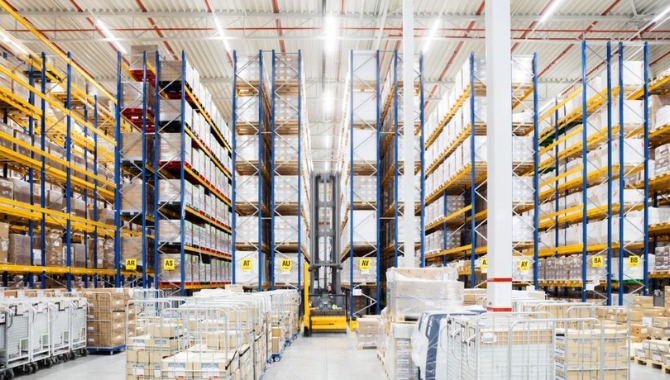
Good practices in the pharmaceutical industry are important factors that your business needs to understand, including:
- GDP
In the pharmaceutical industry, good distribution practices are the division, movement, and storage of drugs from the warehouse of the pharmaceutical manufacturing facility or distribution center to the user or intermediate distribution and storage points or between distribution and storage points by different types of freight transport.
The main role of GDP standards is to ensure the ability to provide quality drugs to users. At the same time, it is necessary to perform comprehensive quality assurance work, including stages related to the production, preservation, storage, and distribution of drugs. GDP is part of comprehensive quality assurance work.
- GWP
Good warehousing practice is a set of rules for ensuring effective warehouse management including inventory control, safety and quality standards, materials handling equipment, and ensuring temperature and humidity stability of medicines.
Types of Pharmaceutical Warehousing

The division and arrangement of warehouse types according to certain criteria aims to facilitate the management and technical construction of warehouses. You can have different types of warehouses as follows:
- Purchasing warehouse, receiving warehouse
This type of warehouse is often located at the production, exploitation, terminal station, or port to purchase and receive goods. The task of the warehouse is to collect goods for a period of time and then transfer them to the place of consumption or other distribution warehouses.
For example, the warehouse of the Pharmaceutical Company is located in the localities to purchase medicinal materials
- Consumption warehouse
This warehouse contains the finished products of the manufacturing enterprise.
For example, the warehouses of pharmaceutical enterprises. The main task of the warehouse is to check, control, and re-test the quality of drugs (including raw materials, semi-finished products, and finished products) that have just been produced, arranged, classified, and packaged according to orders for sale to commercial enterprises or other consumer establishments.
- Transit warehouse
A warehouse located on the transportation route of goods.
For example, warehouses of stations, ports… This is a place to temporarily store goods. Goods are transported from one means of transport to another. Goods are not divided into small pieces but are kept intact.
- Reserve warehouse
This is a type of warehouse used to store goods for a long time and is only used when ordered by the direct management level
- Distribution and supply warehouse
This is a type of warehouse located near consumer units.
For example, warehouses of medicinal materials, chemicals, pharmaceuticals, etc. near pharmaceutical factories. Warehouses of pharmaceutical companies supply goods to consumer units. Here, goods will be sold separately, prepared according to orders.
You can also classify according to the items stored in the warehouse such as:
- Warehouse of medicinal materials
- Warehouse of chemicals, pharmaceuticals
- Warehouse of semi-finished products
- Warehouse of finished drugs
Pharmaceutical Warehousing Equipment
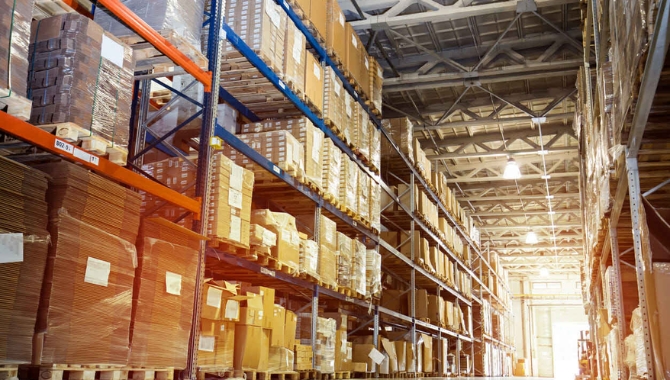
Equipment in pharmaceutical warehouses are necessary technical means to perform warehouse operations – a material condition to improve your business efficiency in warehouses. In general, pharmaceutical warehouses need the following equipment:
- Office equipment
Office equipment to serve warehouse management such as exporting and importing goods, calculating the amount of goods circulating in the warehouse.
- Transportation equipment
Simple transportation equipment: levers, rollers, trolleys, slides, conveyor belts, etc. Modern equipment for transporting and supporting goods: trucks, and automatic forklifts.
- Equipment for stacking goods
To stack goods, the following equipment is required: cabinets, shelves, racks, and platforms.
- Equipment for storing goods
To serve the storage of goods in the warehouse, the necessary equipment is equipment and machinery against humidity, air conditioning equipment, equipment against mold and insects, equipment for inspection, control, testing of goods during storage, fire prevention equipment, equipment for cleaning the warehouse and protecting workers, equipment and machinery against humidity.
Preservation Procedures in Pharmaceutical Warehouses

Air conditioning and humidity in the warehouse. Temperature and humidity are two factors that greatly affect the quality of drugs. High temperature and humidity accelerate the decomposition of drugs and pharmaceutical ingredients, increase the decomposition of medicinal herbs, and create conditions for mold and insects to thrive.
In addition to using air conditioners, in drug warehouses, you can use the following very cheap ways to lower the temperature and humidity in the warehouse, for example:
Limit sunlight in the warehouse, and regularly monitor the temperature and humidity in the warehouse with thermometers and hygrometers. The drug warehouse must be fully equipped with dehumidifiers, refrigerators, freezers, cool storage, and cold storage for drugs requiring special storage.
Regularly check and clean the warehouse to avoid insects and mold damage.
Have a lighting system that illuminates the warehouse all night long.
In addition to the above important technical preservation measures, your warehouses must also organize work to avoid breakage in the warehouse. Avoid dust, avoid direct sunlight, etc. for stored goods. Only then can your business of storage operations in the warehouse be highly effective.
Technology and Innovation in Pharmaceutical Warehousing

- Smart Warehouse Management System
This is a technology application that helps automate the warehouse management process. By using sensors and IoT devices, this system helps you to collect and record information about the location, quantity, and status of goods in the warehouse. This helps manage the warehouse more efficiently and minimize errors.
Smart warehouse management systems also can automatically place orders when needed. When an item in the warehouse reaches the minimum inventory level, the system will automatically create an order to replenish the goods. This helps you ensure that the warehouse always has enough goods to meet customer needs.
- Using barcodes and RFID to track goods
Barcodes and RFID are two widely used technologies in tracking goods.
Barcodes are a series of lines of different widths and spacing, often printed on shipping marks. When the product is imported or exported from the warehouse, the barcode will be scanned to update the information in the warehouse management system. This helps you to accurately track the quantity and location of the product in the warehouse.
RFID is a technology that uses radio waves to communicate between devices. When the product passes through the RFID reader, information is transmitted via radio waves. This helps you to automatically track and record the location of the product in the warehouse accurately and efficiently.
- Supply chain management with blockchain
You can use blockchain technology to increase transparency and security in the pharmaceutical supply chain management process. It is a distributed system that cannot be edited. Each transaction added to the blockchain will be recorded and confirmed by members of the network
Blockchain technology can be used to track the origin of active ingredients, from when they are produced until they are used in the production of drugs.
- Using Robots and Smart Devices in Pharmaceutical Warehouses
One of the notable technological advances is the development and use of smart robots and machines. Robots can be used to perform tasks such as packaging, inspecting, and transporting products. You can program robots to work according to high-quality standards and comply with manufacturing processes
- Using IoT and Smart Sensors
Smart sensors are capable of automatically collecting data on important factors such as temperature, humidity, light, and vibration. This data is then transmitted to the monitoring system for analysis and adjustment of warehouse management processes.
Pharmaceutical Warehouse Optimization Solution

- Improved Inventory Visibility
To address the challenges associated with meeting the growing demands of the healthcare industry, it is important to have accurate and real-time visibility into inventory levels, along with a better understanding of how to effectively manage inventory to fulfill orders more efficiently.
Full inventory visibility enables your business to prepare for unexpected situations and provides the data and analytics needed to make better business decisions, such as how to efficiently allocate inventory across the distribution network to reduce transportation costs and speed up shipping times.
To improve inventory visibility, you can choose solutions such as the WMS warehouse management system, ERP human resource planning system, etc.
- Build effective storage and order management strategies
With the characteristics of pharmaceutical warehouse management, it is necessary to have an effective way to store and distribute inventory, because many drugs have different shelf lives, require different temperature and humidity control, and have specific handling instructions. Therefore, building effective storage and order management strategies is important.
Some methods such as FIFO – First In, First Out and LIFO – Last in, First Out can help organizations solve these problems. Choosing between FIFO and LIFO is one of the basic decisions when designing and organizing a warehouse. It is important that you decide on a storage principle that fits your expected operating procedures as well as your desired requirements.
If the shelf life of each item is critical due to expiration or potential loss of value, then FIFO is recommended in most cases. However, LIFO may be preferred due to space or cost savings. Additionally, depending on the size of the warehouse, both storage principles can be used in parallel.
- Modernizing Manual Warehouse Tasks
Digital transformation is poised to permanently change warehousing, distribution, and order fulfillment operations, and automation is at the forefront of this evolution. Many pharmaceutical warehouses today, in an effort to comply with strict FDA guidelines and improve operational efficiency, are moving to fully automated warehouse solutions.
Warehouse automation, the first step towards a truly “smart warehouse,” provides real-time insights for quality control and reduces manual errors.
Some of the warehouse modernization technologies that organizations can consider applying include Pick To Light smart picking solutions, RFID barcode scanning, WMS warehouse management systems, etc.
- Collect and analyze important data sources
Using smart warehouse management software such as WMS provides accurate real-time visibility into inventory levels. This allows your business to estimate supplies more safely and avoid backlogs, or supply chain difficulties.
On the other hand, with accurate information about the performance of certain products displayed on the software, planners can make reliable decisions for the company about which products to adjust to increase revenue or minimize losses.
Collecting and analyzing data sources also allows manufacturers to minimize risks in supplying raw materials for production. By taking into account external factors that affect the congestion of transportation routes, the company can predict the possibility of on-time delivery.
This will allow the manufacturer to proactively develop contingency plans to minimize the impact of these factors on production
- Developing an effective equipment maintenance plan
Unlike many industrial manufacturing sectors, the healthcare sector often does not prioritize the development of equipment maintenance programs. However, as hospitals, medical facilities, and healthcare facilities increasingly use modern machinery and equipment, the development of effective proactive preventive maintenance procedures becomes more urgent than ever.
Developing an effective equipment maintenance plan is especially important in the healthcare sector, which is increasingly dependent on modern machinery and equipment. Just one small incident can cause serious consequences, both to human health and to the environment.
Given the importance of improving production efficiency as mentioned above, it can be seen that building effective maintenance and repair plans is urgent for medical facilities, especially if it has the ability to automate the management of maintenance tasks effectively.
- Better Prepared for Regulatory Compliance
Regulations require healthcare manufacturers to maintain detailed quality and product information throughout the supply chain. Real-time data management is the most effective way to bring speed and accuracy to regulatory compliance processes. Manual, paper-based methods simply cannot provide the same level of accuracy for product history, full traceability, audit trails, and quality control.
In addition to ensuring manufacturing quality, ensuring worker safety in the warehouse is also a major concern for organizations. One way to maximize warehouse safety is to use material handling equipment specifically designed with the safety of warehouse operators in mind, such as PPE, modern forklifts, etc., that provide the features needed to handle palletized products and long loads with ease.
How to Choose the Right Pharmaceutical Warehousing Partner
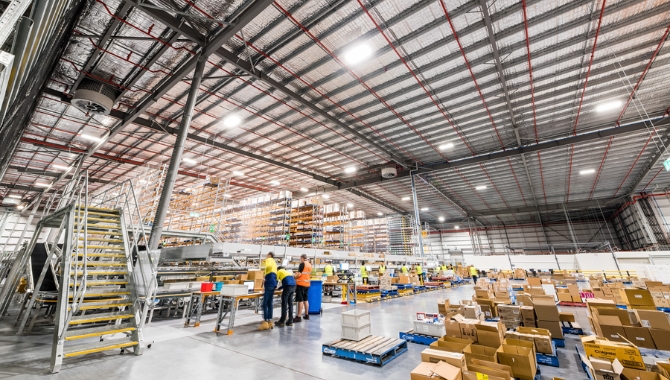
Finding a reputable pharmaceutical warehouse logistics company is extremely important. Here are some methods you can use to choose the right partner for your business.
- Check licenses and certificates
A reputable pharmaceutical shipping company must have a valid business license and necessary quality certificates such as GSP (Good Storage Practice) and ISO 9001. These certificates ensure that the shipping company complies with international standards for the storage and transportation of pharmaceuticals.
In addition, having specific certifications in the pharmaceutical industry is also an important factor. GDP (Good Distribution Practice) certification, for example, ensures that pharmaceuticals are distributed and transported properly and safely.
- Consider experience and reputation in the market
Operating experience
Experience is an indispensable factor when choosing a reputable pharmaceutical shipping company. A company with many years of experience in the industry will understand the specific requirements and transportation processes, thereby ensuring the safety and efficiency of pharmaceutical products.
Customer reviews
Reviews and feedback from previous customers are an important source of information to verify whether a pharmaceutical shipping unit is reputable or not. You can search for these reviews on specialized websites, and social networks, or ask directly from partners and previous customers of the shipping unit.
- Check the management system
A reputable pharmaceutical warehouse provider needs to have a modern management system to monitor the transportation process. This system includes controlling temperature, humidity, and other storage factors to ensure that pharmaceuticals are always in the best condition.
Bansarchina.com is a reputable freight-forwarding supplier with over 12 years of experience providing pharmaceutical warehousing solutions for businesses. Please contact us if you need advice on pharmaceutical warehouse, pick up and delivery, we are always ready to help you find the best solution at a reasonable price.
Conclusion

To wrap it up, pharmaceutical warehouses are an important factor in ensuring the quality of products – items related to medicine. Favorable conditions are created due to the application of good warehouse management solutions. Hopefully, you have a basic understanding of pharmaceutical warehouses and the criteria for finding a suitable service provider.
FAQs:
What are the preparations before receiving goods into the pharmaceutical warehouse?
To receive goods quickly and accurately according to the agreed requirements, you need to prepare in advance such as:
- Prepare the warehouse
- Prepare the means of loading and unloading
- Depending on the requirements and the quantity of goods, prepare appropriate means
to check, control, and test the goods.
- Prepare human resources
- Prepare all necessary documents and procedures to receive the goods quickly
What are the preparations before exporting goods from the pharmaceutical warehouse?
Several things you need to do before exporting goods such as:
- Prepare goods to match the warehouse receipt. Depending on actual requirements, classify and arrange goods appropriately, ensuring that import and export are quick, accurate, and safe.
- Prepare necessary means and tools such as scales, forklifts, transporters, etc.
- Prepare staff to match the workload
What should I consider when choosing a location for a pharmaceutical warehouse?
You need to base on the warehouse’s tasks to choose the appropriate warehouse location.
- The purchasing warehouse must be located in a place with many sources of raw materials to buy.
- The product consumption warehouse or the warehouse supplying raw materials to manufacturing enterprises must be located near those enterprises.
- The distribution warehouse must also be located in the center of goods consumption. The warehouse must have a large enough area to be divided into separate rooms and areas.
- The warehouse must not only have a place to directly store and stack goods but must also have other areas.
What shipping methods and types of transportation can I use to deliver goods to pharmaceutical warehouses?
One of several shipping methods that Bansar offers you to deliver goods from your manufacturers to your warehouse is door-to-door shipping. About the types of transportation, you can choose air freight or sea freight to deliver goods.

